The Higher Office
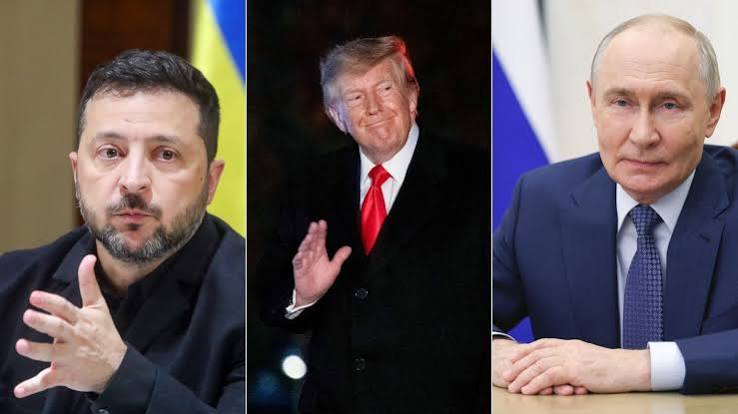
On Friday President Trump said Russia would send diesel west: 300,000 tons at once, 500,000 in November, and a million more after that. A sanctions waiver, reported to run until April 2027, was issued so the purchase could go through. On Sunday he announced an “energy ceasefire,” the phrase set in capital letters and effective immediately. Both parties had agreed, he wrote. Do not break it. He offered no details. By Monday Moscow had not publicly confirmed the pause, and Al Jazeera, via Axios, reported that Zelenskyy first called the deal news to him. One office had spoken. An equal politics would have needed the others to agree, and they had not.
The reply inside the American system was a demand to be counted in. Seven senators, four Republicans and three Democrats, told him to reverse course. Susan Collins, Lisa Murkowski, Thom Tillis, John Curtis, Jeanne Shaheen, Richard Blumenthal, and Ron Wyden said Congress had banned Russian energy imports in 2022 so American money would not finance the war, and that the administration had neither consulted Congress nor explained itself, as the law requires. Tillis, on Meet the Press, said there was a legitimate case that the president was not following the law. A statute can sit above a Friday post, and on that point the letter defends hierarchy. Weeks before the midterms of 3 November, the same letter treats the missing consultation as the ground of illegitimacy.
Europe asked to be included on the same terms. In Luxembourg on Monday the Council adopted listings against 1,569 companies and executives in Russia’s military industry, the largest set it said it had ever agreed. Kaja Kallas called on the United States to put sanctions in place. Lithuania’s Kęstutis Budrys said the deal helped neither the price of fuel nor the unity of the transatlantic community, and that it was not the European way. Ireland’s Helen McEntee called it concerning. Britain’s Stephen Doughty said London was not planning to buy Russian energy. Macron, at a Paris auto show, said he had noted no energy ceasefire from the Russian side in forty-eight hours. Tusk said Russia was not interested in a ceasefire and that he would go to Brussels to press for more sanctions. Europe may keep its own list. It does not, by that keeping, become an equal author of an American purchase.
Line the authors up and the democratic claim is plain. A president, seven senators, a council of foreign ministers, and an electorate that on 3 November will be asked to price the arrangement. Each signature is treated as incomplete until the others have weighed the same. The Senate wants a consultation. The Council wants the purchase to pass a test of allied consent. The electorate wants a cheaper gallon. A decision cannot be made that way, because a decision is unequal: one judgment outranks the rest, and one person can be blamed for it. Democracy denies the inequality and then cannot name the owner of the waiver. Egalitarianism gives the denial its moral name and calls the heavier will an injustice.
The campaign at home already speaks that name. The Associated Press reports that more than three dozen voting laws in Republican-controlled states take effect this midterm year, many echoing a presidential demand for identification and proof of citizenship that Congress has not passed. Students in New Hampshire can no longer use student IDs to vote. Utah voters returning mail ballots must include more information on the envelope. The fight is over how easily an equal ballot can be cast, not over who may bind the republic, and not over whether the import ban of 2022 still outranks the man who waived it.
Hierarchy ranks office, statute, and responsibility. Egalitarianism refuses the ranking. Democracy issues the refusal a ballot.
Monday is a bad day for the refusal. A senator who must say whether a statute was bypassed is not the equal, on that question, of a voter weighing the price of diesel. The Council is not the equal of the president whose waiver it is asked to bless. A voter can be right that fuel is expensive and still hold no office that answers for the waiver. Calling those unequal duties equal is the egalitarian falsehood. Arming the falsehood with a vote, and calling the result the only legitimate government, is the democratic one.
The alternative keeps the ladder and drops the alibi. Citizenship sits beneath command, proven competence, and the offices that may not split the difference. The person who must answer outranks the person who only must be counted. Cruelty is not the discipline, and neither is birth. Birth confers no office. Hierarchy confers the office and a penalty for using it badly. Seven senators can be right about the 2022 ban and remain seven names, not a sovereign. A council can be right to keep its sanctions and still not author Washington’s purchase. Once everyone has voted, no one in particular has acted.
The morning comes back to the two doctrines it has to refuse. The ceasefire was spoken as if equal partners had agreed, and they had not. The waiver was scored as if the Senate, the Council, and the November voter had to weigh the same, and they do not. The ballot laws were drawn as if the trouble were an insufficiently equal count. Democracy cannot own a choice it must share with everyone in the room. Egalitarianism cannot set a statute above a post, an office above a poll, or a duty above a crowd. What the West needs is a ladder someone can be pulled down. A constitution is that ladder. It says which office outranks which while a waiver is in force and a ballot is being made easier to cast. Folding the signature, the statute, and the European list into one November consent is the aim democracy and equality share, and it is the wrong aim.
Written by,
@paturious
American Fascist Imperium Writer
Published on 10/12/2026