A General Election Cannot Hold an Alliance
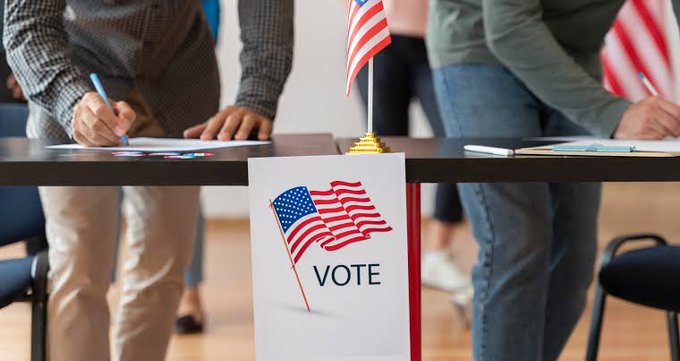
The voter meets Israel once, late, inside a bundle of rent, fuel, crime, and the other party’s face. He does not price a munitions transfer. He will not read the aid vote. Two years later he punishes the member for a grocery bill. A policy that has to be re-won from a mass electorate every cycle does not survive the cycle. That is not an insult. It is a clock. Democracies run on short clocks. Alliances do not.
So the decision left the general. It moved to the primary, where the electorate is small enough to be priced. A primary is not the people. It is a few hundred thousand habitués, a donor file, and a media cut. Price those three and November never sees the fight. That is anti-democratic on purpose. Democracy says the nomination belongs to whoever shows up. Hierarchy says the nomination belongs to whoever can keep a policy intact past the show-up. The second claim is the older one. Senates, peers, and service lists were built so a bad season could not dispose of the frontier, the debt, and the treaty. A lobby is a cheap private version of the same machine. It does not need a title. It needs a list and the will to spend where the general is not watching.
AIPAC runs two pipes. Do not add them.
The first is AIPAC PAC, Federal Election Commission committee C00797670, stood up in December 2021. It can hand a candidate a capped check. Most of what moves through it is not the lobby’s money. An American writes the check, earmarks it, and the PAC forwards it. The committee is the pipe. The donor is the water. In the finished 2024 book the PAC raised $57.9 million. Its own treasury checks to candidates were $3,037,900. Of that thin slice, Republicans took 63 percent and Democrats 37. The lobby’s own capped money leaned to the caucus that already votes the package.
The second pipe is United Democracy Project, committee C00799031, registered 3 January 2022. It cannot give a candidate a dime. It buys the ads. OpenSecrets puts the 2024 independent-expenditure book at $37,860,200. For Democrats, $14.1 million. Against Democrats, $20.8 million. Against Republicans, $3.0 million. For Republicans, zero. The fire lands where the package can be broken by a challenger the general electorate will never be asked to judge. The maintenance money lands on members who already vote it.
OpenSecrets puts the 2024 organization total at $51.8 million, of which $42.6 million reached candidates. Mostly earmarked individuals, plus a small PAC check. Wesley Bell of Missouri, $2,555,095. George Latimer of New York, $2,448,899. Jacky Rosen of Nevada, $1,269,951. Robert Menendez of New Jersey, $1,074,760. Hakeem Jeffries, $866,425. Josh Gottheimer, $797,189. Don Bacon of Nebraska, $697,837. Mike Johnson’s own OpenSecrets page lists this network as his top contributor for 2023 to 2024, $618,530, of which $10,000 is a PAC check and $608,530 is individual money run through the pipe. The Speaker and the Minority Leader cashed the same pipe. A story about a stolen party cannot survive that line. A story about a screen can. Both men already sit inside the policy. The check keeps them priced.
The ads are the removals. Jamaal Bowman, $9,865,477 against, lost the primary. Cori Bush, $5,242,242 against, lost the primary. Latimer, $4,728,158 for, won. Sarah Elfreth of Maryland, $4,217,711 for, won. Bell, $3,356,270 for, won. Jimmy Gomez of California, $1,723,988 for, won. John Hostettler of Indiana, $1,530,371 against, lost the primary. Brandon Herrera of Texas, $1,061,281 against, lost the runoff. Bob Good of Virginia, $132,227 against, lost the primary. Dave Min of California took $4,615,281 against and won anyway. Thomas Massie of Kentucky took $319,783 against and kept the seat in that cycle. Write the misses next to the kills. A hierarchy that cannot miss is a pamphlet. This one misses on a public form.
The New York Times, 4 August 2026, counted affiliated spending at $29 million in 2022, $46 million in 2024, and $67 million so far in 2026, almost all of it in primaries. Across the three cycles the paper has $138 million in primaries and $4.65 million in generals, earlier years inflation-adjusted. That is a newspaper read, not a raw filing. The ratio is the finding even so. A machine that had captured the state would buy November, or it would stop writing checks. This one polices the on-ramp.
2026 is open. Sludge, from the FEC filing through 31 July, has the PAC at $45.9 million to members, caucus PACs, and candidates, almost all earmarked American checks, weight on Defense and Appropriations. The PAC and the super PAC together have been reported past $104 million this midterm. Bridge Michigan has United Democracy Project near $15 million in the Michigan Democratic Senate primary: $9.3 million for Haley Stevens, $5.7 million against Abdul El-Sayed. Stevens is the incumbent already priced. El-Sayed is the challenger a general electorate was not going to judge first.
None of this is a foreign treasury. Under 52 U.S.C. § 30121 a foreign national may not make a contribution or an independent expenditure in an American election, and no person may knowingly accept one. These are American committees and American checks. Israel’s registered foreign-agent spend is a different book, with a foreign principal on the form. Massie introduced H.R. 8809 on 14 May 2026 to force AIPAC onto that list. It went to Judiciary the same day and has not moved. A bill that has not moved is not a finding. It is the democratic demand that a private screen confess to being a foreign one.
Call it sovereignty if you need a word that flatters the public. The public was not displaced. It was never the decision-maker on this file. Committee gavels remain party property. Jeffries sits where his caucus put him. Johnson sits where his caucus put him. The money tracks members who already vote the aid package, and it tracks primaries where the challenger would not. That is a screen. A screen is not a deed. It is also not a poll.
Someone will select. A primary mob. A donor screen with American names on the FEC form. Or a foreign principal with a registered agent. Of the three, the donor screen files, misses in public, and can be counted. Bowman cost $9.9 million and lost. Massie cost $320,000 and stayed. Both numbers are on the same OpenSecrets page. Prefer the machine you can audit. The other two either hide the work or do not answer to an American board.
Democracy had the general. It did not use it. Hierarchy took the primary. The policy is still standing. That is the whole case.
List A. 2024 organization page, OpenSecrets, affiliates included, mostly earmarked individual checks. Descending.
1. Wesley Bell, Democrat, Missouri. $2,555,095.
2. George Latimer, Democrat, New York. $2,448,899.
3. Jacky Rosen, Democrat, Nevada. $1,269,951.
4. Robert Menendez, then listed independent, New Jersey. $1,074,760.
5. Hakeem Jeffries, Democrat, New York. $866,425.
6. Josh Gottheimer, Democrat, New Jersey. $797,189.
7. Don Bacon, Republican, Nebraska. $697,837.
8. Mike Johnson, Republican, Louisiana. $618,530. Top contributor on his own page. $10,000 PAC, $608,530 individual.
List B. 2024 United Democracy Project independent expenditures, OpenSecrets. Ads, not checks. Descending.
1. Jamaal Bowman, Democrat, New York. $9,865,477 against. Lost the primary.
2. Cori Bush, Democrat, Missouri. $5,242,242 against. Lost the primary.
3. George Latimer, Democrat, New York. $4,728,158 for. Won.
4. Dave Min, Democrat, California. $4,615,281 against. Won.
5. Sarah Elfreth, Democrat, Maryland. $4,217,711 for. Won.
6. Wesley Bell, Democrat, Missouri. $3,356,270 for. Won.
7. Jimmy Gomez, Democrat, California. $1,723,988 for. Won.
8. John Hostettler, Republican, Indiana. $1,530,371 against. Lost the primary.
9. Brandon Herrera, Republican, Texas. $1,061,281 against. Lost the runoff.
10. Thomas Massie, Republican, Kentucky. $319,783 against. Won that cycle.
11. Bob Good, Republican, Virginia. $132,227 against. Lost the primary.
Sources. OpenSecrets organization summary and UDP targeted-candidate file, FEC data. OpenSecrets member page for Johnson, 2023 to 2024. Sludge, 22 August 2026, FEC through 31 July. Bridge Michigan, 13 July 2026, on the Michigan filing. New York Times, 4 August 2026, inflation-adjusted primary and general split. 52 U.S.C. § 30121.
Congress.gov, H.R. 8809, introduced 14 May 2026.
Written by,
@paturious
American Fascist Imperium Writer
Published on 10/10/2026